Balayage vs. Ombre: Which Hair Coloring Technique is Right for You?
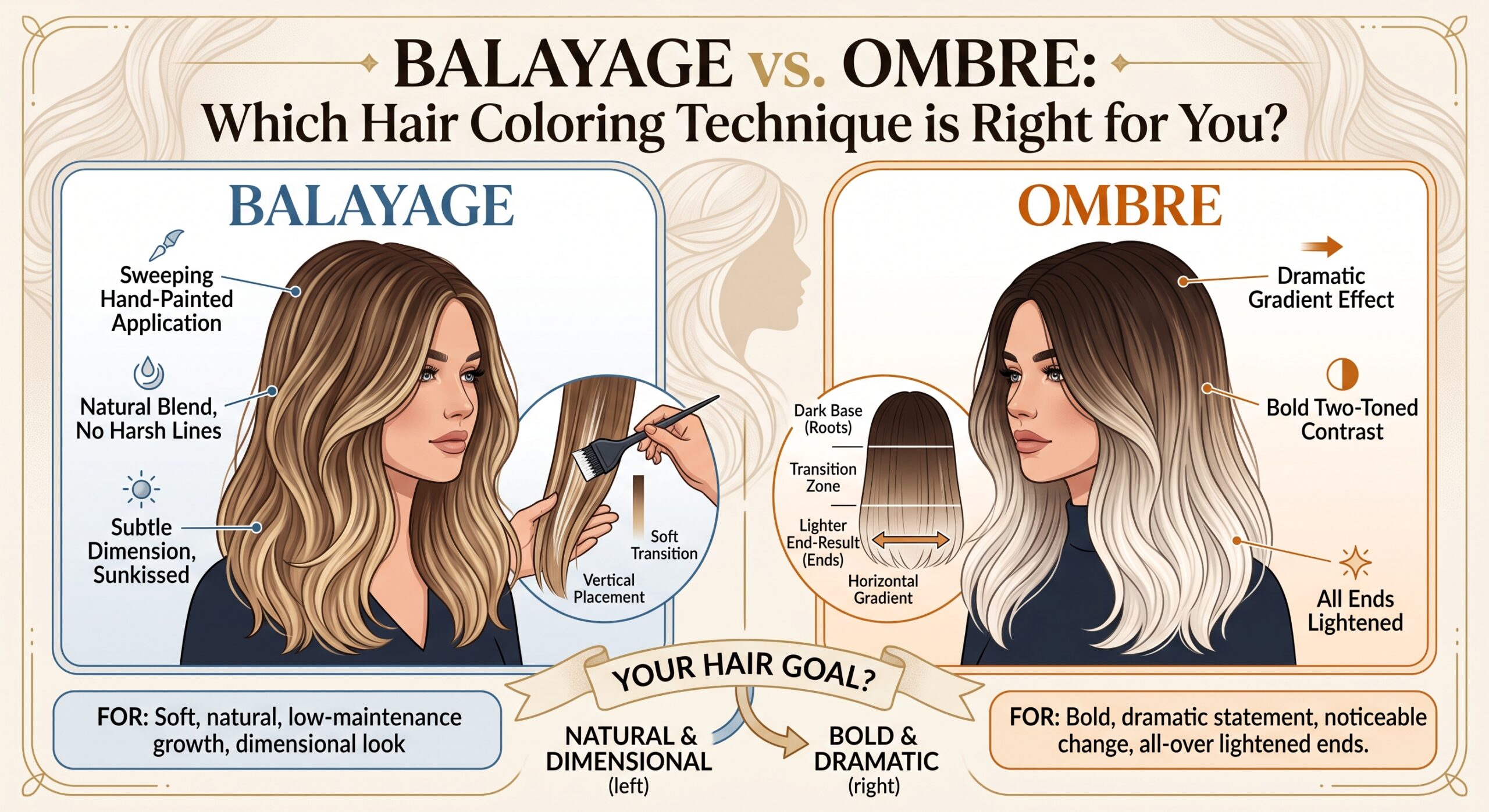
If you are trying to decide between balayage and ombre, the short answer is this: balayage creates a soft, sun-kissed, rooty glow that grows out seamlessly, while ombre features a deliberate, high-contrast transition from dark roots to lighter ends. The right choice depends on your maintenance tolerance, your base color, and the statement you want to make. For clients in Guelph, ON, this decision usually comes down to lifestyle and how often you want to see your colorist. Let’s break down the technical differences, the cost factors, and the maintenance so you can book with confidence.
Understanding the Core Differences
People often use the terms interchangeably, but they are distinct techniques with different end results. Knowing the mechanics helps you communicate clearly with your stylist.
How Balayage is Applied
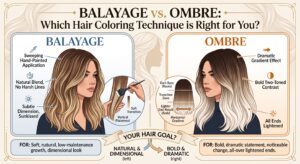
Balayage is a French word meaning “to sweep.” The stylist hand-paints lightener directly onto the surface of the hair in a sweeping motion, focusing on the mid-lengths and ends. Because the saturation is heavier on the ends and lighter near the roots, the result mimics the natural way hair lightens in the sun. There is no foil involved in the initial application, which allows the color to blend more organically with your base.
How Ombre is Achieved
Ombre is a gradient effect where the hair is visibly darker at the crown and gradually lightens toward the ends. Traditionally, this is done with a backcombing technique or foils to create a more defined line of demarcation. The transition can be dramatic, starting lower on the head, or subtle, depending on your preference. Unlike balayage, ombre often leaves the root area completely untouched, which creates that intentional “grown out” look.
Visual Results and Color Placement
The biggest difference you will notice in the mirror is the contrast and the depth of the color melt.
- Balayage: Creates dimension with multiple tonal variations. It looks like you have highlights, but they are blended so well that there is no visible root line. The color is usually brighter around the face to frame your features.
- Ombre: Produces a solid, uniform lightening from the mid-shaft to the ends. There is less tonal variation within the lightened section. The effect is more graphic and intentional.
If you have very dark, virgin hair, ombre can look striking because the contrast is high. If you have lighter brown or blonde hair, balayage tends to look more natural and flattering because it adds depth without washing you out.
Maintenance and Grow-Out: The Real Decision Maker
This is where most Guelph clients make their choice. The grow-out phase dictates how often you need to be in the salon chair.
The Balayage Grow-Out
Balayage is the winner for low maintenance. Since the color is painted heavier on the ends and softer at the root, there is no harsh line when your hair grows. You can easily go 12 to 16 weeks between appointments. Many clients only book twice a year for a refresh. The color fades gracefully, and the root shadowing means you never look “undone.”
The Ombre Grow-Out
Ombre requires a bit more planning. While the roots are naturally dark, the line where the lightener begins can become more apparent as your hair grows longer. If the transition line sits too high, it can look stripey over time. You will likely need a touch-up every 8 to 10 weeks to reposition the gradient and ensure the blend stays smooth, especially if you have a shorter cut.
Cost Factors and Salon Pricing in Guelph
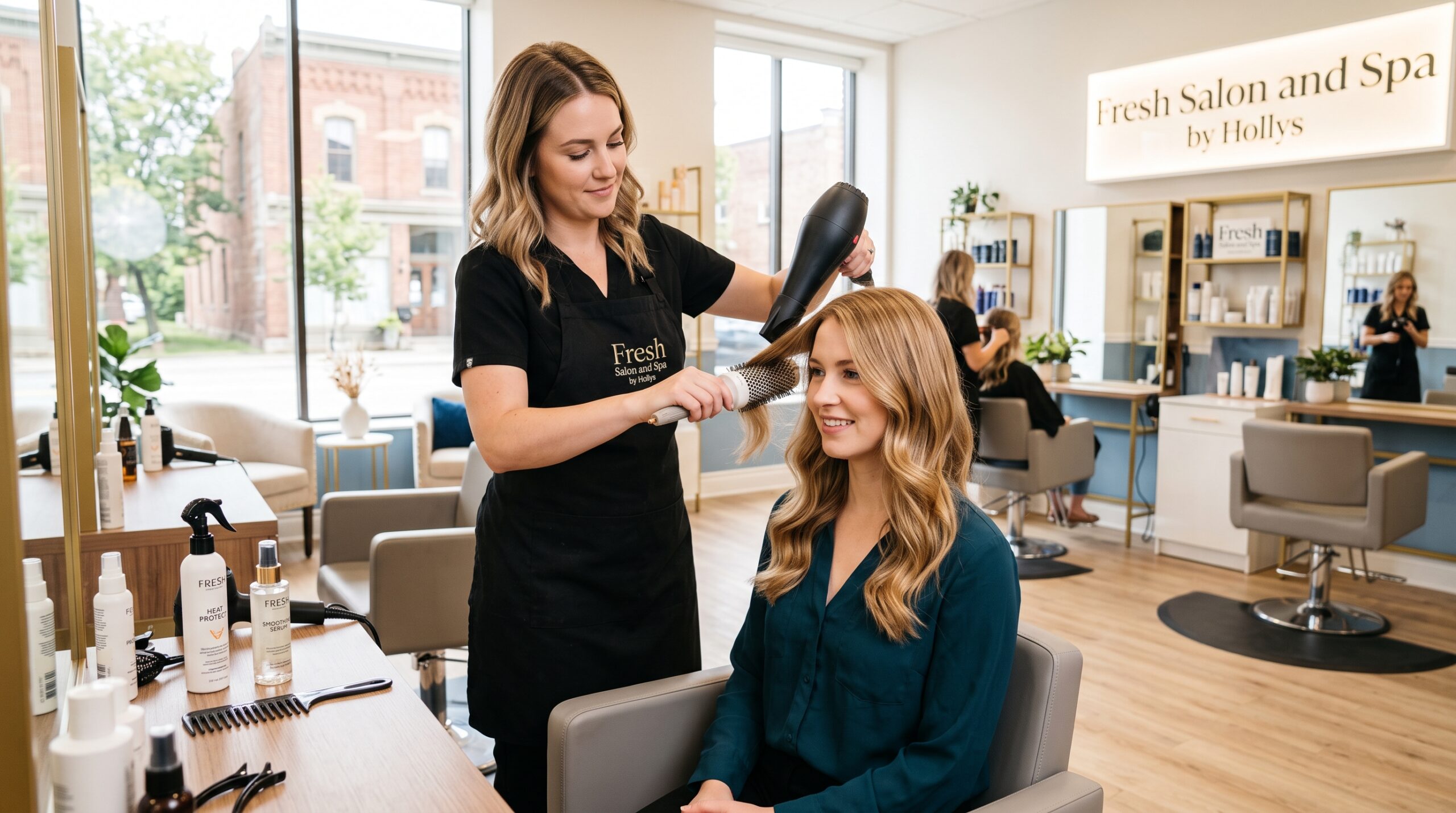
Pricing for these services varies significantly based on hair length, density, and the stylist’s experience. At Fresh Salon and Spa in Guelph, ON, we operate on a level system based on the provider’s industry experience and client demand. An Entry-level stylist will have a lower hourly rate than a Level 4A or 4AA stylist who has decades of high-demand experience.
Generally, you can expect the following factors to influence the quote:
- Length and Density: Long, thick hair requires more product and more time to paint, which increases the cost.
- Base Color: Going from a level 1 (black) to a level 8 (light blonde) requires more lifting power and often a second session. This is more expensive than lightening a level 6 (dark blonde) to a level 9.
- Toning: Both techniques require a toner to neutralize brassiness. A high-quality gloss or toner adds to the final price but is essential for the finished look.
- Complexity: A full balayage with a shadow root will cost more than a simple ombre because it involves more color correction and blending steps.
On average, in Guelph, a full balayage or ombre service ranges from $180 to $350. A partial balayage (focusing on the face-framing pieces and top layer) is cheaper, usually starting around $140. Always ask for a consultation before booking so the stylist can give you an exact estimate based on your hair history.
Skin Tone and Base Color Matching
Not every color works for every complexion. A skilled colorist will assess your undertones before deciding on the formula.
Choosing the Right Tone
If you have warm or olive undertones, a balayage with honey, caramel, or golden tones will look radiant. If you have cool or pink undertones, ash, beige, or pearl tones prevent the hair from looking yellow. Ombre often looks best when the ends are toned to a cool or neutral shade to avoid a brassy, orange appearance against fair skin.
Your natural base color matters too. Balayage works beautifully on brunettes because it creates a lived-in, dimensional look. Ombre is a classic choice for those who want to go significantly lighter without the commitment of full highlights on the scalp. If you have previously box-dyed hair, neither technique is a quick fix. You will need a color correction first to lift the artificial pigment safely.
Which Technique Suits Your Hair Type?
Hair texture plays a role in how the color reads.
- Curly or Wavy Hair: Balayage is superior. The hand-painted color enhances the natural movement and texture, creating depth that shifts as the curls bounce. Ombre can look blocky on curly hair because the gradient line is more visible when the hair is compressed.
- Fine or Straight Hair: Ombre can work well because the smooth, straight surface shows off the gradient line clearly. Balayage also works, but the stylist needs to be careful not to over-saturate the ends, which can make fine hair look stringy.
- Thick, Coarse Hair: Both techniques work, but ombre may require a longer processing time to lift the dense cuticle. Balayage on thick hair provides a beautiful, multi-tonal effect that reduces the appearance of bulk.
Common Mistakes to Avoid
Knowing what not to do saves you money and heartache.
- Asking for “Beach Hair” in Winter: The sun naturally lightens hair in summer, but in winter, a stark balayage can look out of place. Ask for a “rooted” balayage to keep it soft and seasonal.
- Going Too Light Too Fast: Lifting dark hair to a pale blonde in one sitting causes severe damage. A good colorist will suggest a two-step process over a few weeks to maintain hair integrity.
- Skipping the Toner: The toner is what makes the color look expensive. Without it, you are left with a yellow or orange cast. Never skip the glossing step.
- Neglecting Home Care: Using clarifying shampoo or hot water will strip the color quickly. Invest in a sulfate-free shampoo and a purple toning mask if you have blonde ends.
Making the Final Decision and Booking
Here is a quick decision matrix to help you decide before you call the salon:
| Scenario | Best Choice |
|---|---|
| You want a natural, sun-kissed look with minimal upkeep. | Balayage |
| You want a dramatic, high-contrast fashion statement. | Ombre |
| You have short hair (above the shoulders). | Balayage (ombre can look odd on short cuts) |
| You have long, straight hair and want a defined gradient. | Ombre |
| You only want to visit the salon 2-3 times a year. | Balayage |
| You have curly hair and want to enhance texture. | Balayage |
Once you have decided, book a consultation. Bring reference photos, but be open to the stylist’s suggestions based on your hair’s current condition. If your hair is damaged from previous chemical services, the stylist may recommend a bond-building treatment before any lightening service.
Frequently Asked Questions
Can I switch from ombre to balayage?
Yes, but it takes a transition period. You cannot simply paint over the existing ombre line. The stylist will likely do a shadow root to blur the line and then paint balayage highlights through the mid-lengths to blend the old color. This may take one or two sessions to perfect.
How long does the service take?
A full balayage or ombre application takes between 2.5 and 4 hours depending on hair length and density. This includes the application, processing time, toning, and styling. Do not book it on your lunch break.
Will balayage work on black hair?
Yes, but you need to manage expectations. Black hair (level 1 or 2) cannot lift to a light blonde in one session without significant damage. The first appointment will likely result in a warm, caramel or copper tone. A second appointment weeks later can lift it further to a golden blonde. Plan for two sessions if you want a dramatic change.



Post Comment